How to size a solar system that actually carries your load
Most undersized solar installations fail for the same reason: the system was quoted from a roof photo instead of a load profile. Here is how we work out what a site actually needs.
The single most common problem we are called in to fix is a solar system that cannot carry the load it was sold to carry. The panels are fine. The inverter is fine. The sizing was wrong from the start.
Start with the load, not the roof
A roof tells you the maximum you could install. It tells you nothing about what you need. Before we quote anything, we build a load profile: every appliance that must keep running, its power draw, and — the part people skip — how many hours a day it actually runs.
A 2,000 W borehole pump that runs for twenty minutes a day is a much smaller problem than a 400 W fridge that runs all night. Peak demand and daily energy are two different numbers, and you need both.
Separate what is essential from what is convenient
Very few sites can afford to run everything off solar, and most do not need to. We split the load into three tiers:
- Critical — security systems, network equipment, lighting, refrigeration. These stay up no matter what.
- Working — computers, tills, production equipment. These stay up during business hours.
- Deferrable — water heating, pumping, laundry. These can run when the sun is out.
Wiring the critical tier onto a dedicated circuit is usually the cheapest thing you can do to make a modest system feel reliable, because the battery is never being drained by something that could have waited until noon.
Size the battery for the night you actually have
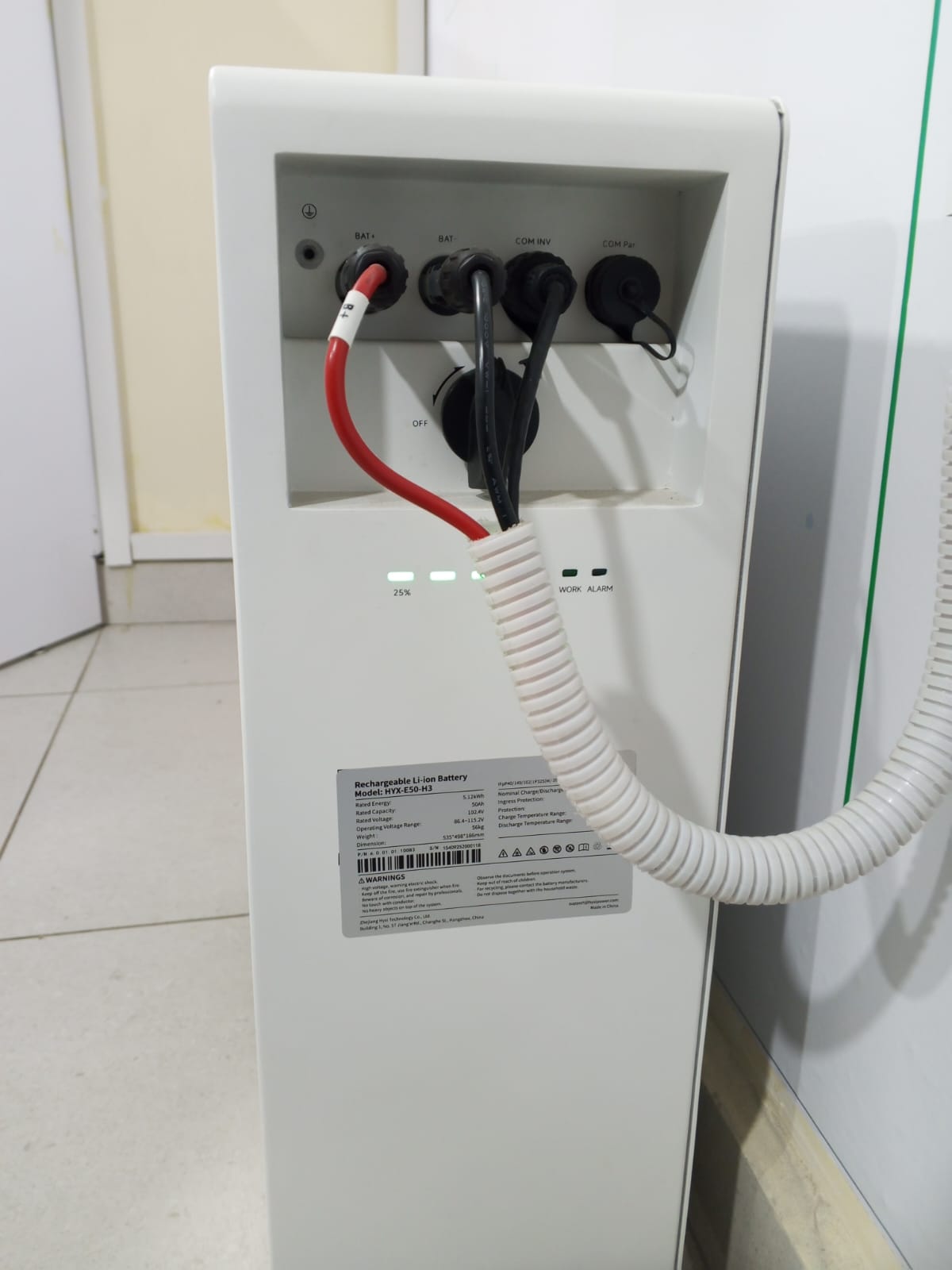
Battery capacity is where budgets disappear. The honest question is not “how many days of autonomy do I want” but “what is the longest outage I realistically face, and what has to survive it”.
A system that carries the critical tier through every outage is worth more than one that carries everything through outages that never happen.
Leave room for what comes next
Businesses grow and loads grow with them. We size the inverter and the DC wiring with headroom so that adding panels later is a morning's work rather than a rebuild. That headroom costs very little on day one and saves a great deal in year three.
If you are not sure what your load profile looks like, that is normal — most people are not. It is exactly what a site survey is for.