Lithium or lead-acid? Choosing battery storage for a Kenyan site
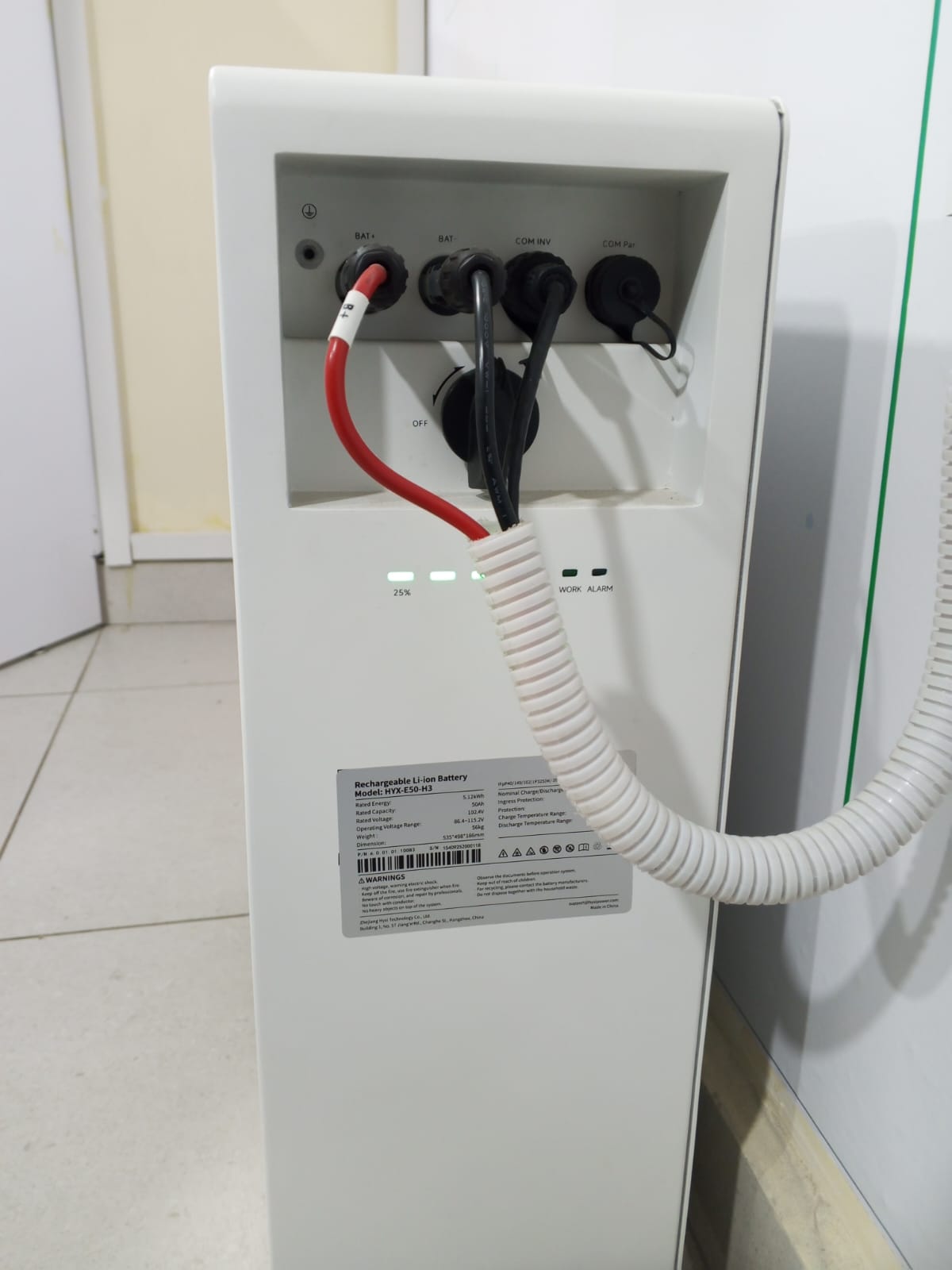
Lead-acid looks cheaper on the quotation. Over the life of the system it usually is not. Here is how the two actually compare.
Battery choice is the line on a solar quotation that causes the most argument, because lead-acid always looks cheaper and lithium always looks expensive. Comparing them on purchase price alone is the mistake.
Usable capacity is not rated capacity
A lead-acid battery should not be discharged much past half its rated capacity without shortening its life sharply. A lithium battery of the same rating will give you most of its capacity, repeatedly. Two batteries with the same number on the label can differ by nearly double in what you can actually use each night.
Count the cycles
The number that matters is cycles: how many charge-and-discharge rounds the battery will do before capacity falls away. Divide the price by usable capacity and then by cycles, and the cost per usable unit of stored energy is usually markedly lower for lithium — often by enough to pay for itself well inside the system's life.
Where lead-acid still makes sense
- Very small systems where the absolute purchase price is the binding constraint
- Backup-only systems that sit charged and cycle rarely
- Sites where an existing bank is healthy and can be extended rather than replaced
Things to check whichever you choose
Ventilation and temperature, a battery management system you can actually read, and an installer who will still be reachable in year three. The cheapest battery is the one that is still doing its job when the warranty expires.